
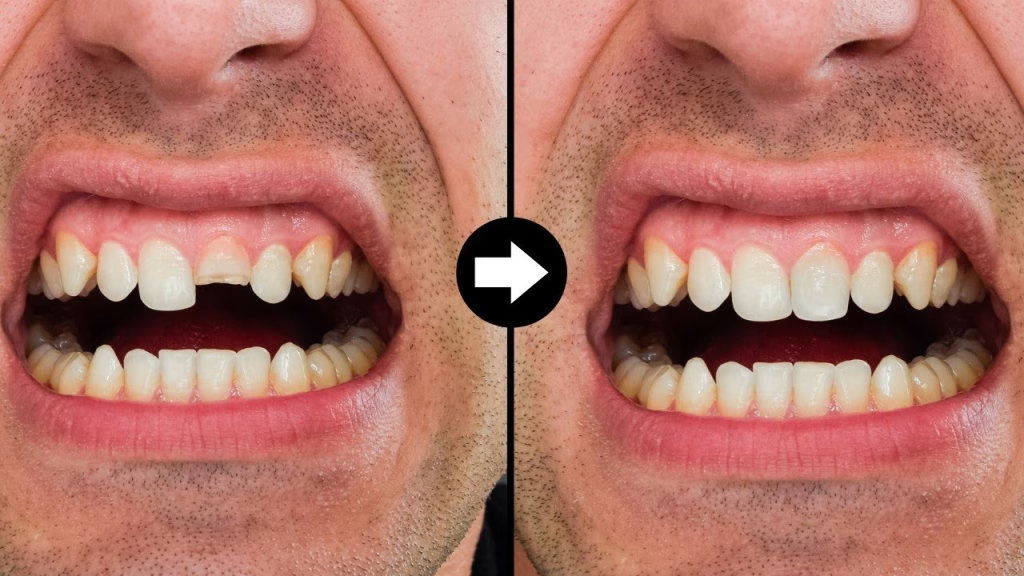
How Replacing Missing Teeth Protects Your Smile and Supports Long-Term Oral Health
Author
Dr. Anusha Unni K ( Founder of Smile Mantra Dental Clinic )
Have You Lost a Tooth and Wondering If It Really Needs to Be Replaced?
In my practice, many patients come in with a missing tooth and are unsure whether replacing missing teeth is actually necessary, especially when there is no pain or visible concern.
However, from a clinical perspective, a missing tooth is not just a gap—it affects your overall oral health over time. Missing teeth can lead to changes in alignment, difficulty in chewing, and increased risk of dental problems if left untreated.
This is why I always explain that missing teeth replacement is not only about aesthetics. It is a preventive step that protects your smile, your bite, and your long-term dental health.
Why Replacing Missing Teeth Early Is Important for Protecting Your Oral Health
One of the most important factors in missing teeth treatment is timing. Replacing missing teeth early helps maintain the natural balance of your teeth and prevents complications from developing later.
When a missing tooth is replaced at the right time, it reduces the chances of surrounding teeth shifting and helps preserve your bite function.
Replacing missing teeth early helps to:
- Prevent shifting of adjacent teeth into the gap
- Maintain proper bite alignment and chewing function
- Support long-term gum and oral health
- Reduce the need for complex dental procedures later
- Preserve spacing for future dental implants or bridges
- Improve overall treatment predictability
Early tooth replacement is always simpler and more effective than delayed correction.
What Happens Inside Your Mouth If You Don’t Replace a Missing Tooth on Time?
When patients delay missing teeth replacement, several changes begin to occur inside the mouth—even if they are not immediately visible.
The teeth next to the gap start drifting, and the opposite tooth may begin to move out of position. Over time, this can affect your bite and create imbalance in how your teeth function together.
Another important change is jawbone loss. Without the natural stimulation from a tooth root, the bone in that area begins to shrink. This can affect future treatment options, especially if dental implants are considered later.
How Missing Teeth Can Affect Your Chewing Ability and Everyday Comfort
Missing teeth do not just affect appearance—they directly impact how you chew and use your teeth daily.
When one tooth is missing, patients often shift chewing to one side. This creates uneven pressure, which may lead to discomfort and increased wear on certain teeth.
Replacing missing teeth helps restore normal chewing function and allows you to eat comfortably without overloading specific areas of your mouth.
Why Leaving Missing Teeth Untreated Can Lead to More Serious Dental Problems Over Time
An untreated missing tooth can lead to multiple oral health problems over time. The empty space creates conditions that make cleaning more difficult and increases the risk of plaque buildup.
This can affect not only the gap area but also the surrounding teeth and gums.
If missing teeth are not replaced, it may lead to:
- Food trapping and plaque accumulation
- Increased risk of gum disease
- Movement of nearby teeth
- Bite imbalance and uneven pressure
- Difficulty maintaining oral hygiene
- Higher chance of needing advanced treatments later
This is why replacing missing teeth is an important part of preventive dental care.
Why I Strongly Advise Patients Not to Delay Replacing Missing Teeth
It is very common for patients to delay missing tooth replacement, especially when the gap is not visible. However, delaying treatment often leads to more complex dental problems.
What could have been a simple dental procedure may later require additional treatments due to shifting teeth or bone loss.
From my experience, replacing missing teeth early always leads to better outcomes, simpler procedures, and more stable long-term results.
What Are the Available Treatment Options for Replacing Missing Teeth Effectively?
There are several treatment options available for missing teeth replacement, and the best option depends on your individual condition.
At Smile Mantra Dental Clinic, I guide patients through options such as dental implants, dental bridges, and other restorative solutions based on their needs.
The most suitable option depends on:
- Number of missing teeth
- Jawbone condition and support
- Health of surrounding teeth
- Patient preference and comfort
- Long-term durability
- Budget and treatment goals
A proper consultation helps determine the most effective and long-lasting solution.
How Replacing Missing Teeth Improves Both Oral Function and Overall Confidence
Replacing missing teeth provides both functional and aesthetic benefits. It restores proper chewing ability, maintains alignment, and supports overall oral health.
At the same time, it improves confidence in speaking and smiling. Many patients notice a significant difference not only in how they look but also in how comfortably they can use their teeth.
Replacing missing teeth is not just a cosmetic improvement—it is a key step in maintaining complete oral health.
When Is the Right Time to Replace Missing Teeth for the Best Results?
One of the most common questions I get is about timing. The best time to replace missing teeth is as early as possible, ideally before surrounding teeth start shifting or bone loss begins.
In my clinical experience, early intervention gives us more treatment options and better long-term stability. When patients wait too long, additional procedures may be needed to correct changes that have already occurred.
I usually recommend early replacement when:
- The tooth loss is recent
- Surrounding teeth are still stable
- Bone support is adequate
- Chewing is already affected
- There is visible spacing or shifting starting
- The patient is planning for a long-term solution
Timely treatment helps preserve both function and structure.
What Are the Best Treatment Options for Replacing Missing Teeth?
Patients often ask which option is best—dental implants, bridges, or other solutions. The answer depends on your individual condition, but I always focus on long-term oral health while recommending a treatment.
Dental implants are often considered one of the most effective solutions because they replace both the tooth and its root, helping preserve bone. Dental bridges are another option when adjacent teeth can support the replacement.
The right choice depends on clinical factors, and a proper evaluation helps in selecting the most suitable method.
How Replacing Missing Teeth Helps Prevent Future Dental Problems
Replacing missing teeth is not just about fixing the present issue—it is about preventing future complications.
When a missing tooth is replaced, it helps maintain the position of surrounding teeth, supports proper bite alignment, and reduces stress on other teeth.
Replacing missing teeth helps prevent:
- Shifting of adjacent teeth
- Bite imbalance and uneven chewing pressure
- Jawbone loss in the missing area
- Increased wear on remaining teeth
- Gum-related issues around the gap
- Complex dental treatments later
This preventive approach is one of the main reasons I emphasize early treatment.
What Should You Expect During Missing Teeth Treatment?
Many patients feel unsure about what the process involves. I always make sure to explain the steps clearly so that they feel confident before starting.
The process begins with a detailed examination, followed by planning based on your oral condition. Once the treatment plan is finalized, the procedure is carried out in a structured way.
Patients are guided throughout the process, and each stage is designed to ensure comfort, accuracy, and long-term success.
How Long Does It Take to Adjust After Replacing a Missing Tooth?
Another common concern is the adjustment period. In most cases, patients adapt quickly to the new replacement.
Initially, the new tooth may feel slightly different, but as you begin using it during daily activities like chewing and speaking, it becomes more natural.
Most patients feel comfortable within a short period, and the replacement integrates well with existing teeth.
What Habits Help Maintain Your Tooth Replacement for Years?
Replacing a missing tooth is only the first step. Proper care is essential to ensure long-term success.
I always advise my patients to:
- Maintain good oral hygiene daily
- Brush and floss around the replacement properly
- Visit for regular dental check-ups
- Avoid excessive force on the replaced tooth
- Follow specific care instructions given
- Report any discomfort early
These simple habits help keep your replacement stable and functional for many years.
Why Choosing the Right Dental Care Makes a Big Difference in Results
The success of missing teeth treatment depends not only on the procedure but also on how well it is planned and executed.
A detailed evaluation, proper technique, and continuous follow-up care all contribute to better outcomes. Patients also benefit from clear communication, which helps them understand the process and stay confident throughout.
Choosing the right approach ensures that the results are not only effective but also long-lasting.
How I Plan Missing Teeth Replacement for Natural and Long-Lasting Results
In my approach, replacing missing teeth is not just about filling a gap. I focus on restoring balance, function, and natural appearance.
Every patient has different dental needs, and treatment should reflect that. I ensure that the replacement fits comfortably, supports your bite, and blends naturally with your existing teeth.
At Smile Mantra Dental Clinic, each case is planned individually with a focus on precision, comfort, and long-term stability.
Ready to Replace Missing Teeth and Protect Your Oral Health?
If you have been delaying missing tooth replacement, this is the right time to take action.
A proper consultation will help you understand your condition, explore the best treatment options, and choose a solution that supports your long-term oral health.
Taking the first step can help you:
- Restore proper chewing and bite function
- Prevent shifting of surrounding teeth
- Maintain jawbone health
- Avoid future dental complications
- Improve confidence in your smile
- Achieve long-lasting oral stability
Book your consultation today and take the first step towards restoring your complete, healthy smile.
Frequently Asked Questions
Is it important to replace missing teeth even if there is no pain?
Yes, replacing missing teeth is important because even without pain, it can lead to shifting, bone loss, and oral health issues over time.
What is the best option for replacing missing teeth?
Dental implants are often considered the best long-term solution, but bridges and other options may also be suitable depending on your condition.
Can missing teeth affect overall oral health?
Yes, missing teeth can affect chewing, alignment, jawbone health, and increase the risk of other dental problems.
How soon should I replace a missing tooth?
It is best to replace a missing tooth as early as possible to prevent complications and maintain oral structure.
Will replacing a missing tooth feel natural?
Yes, once adjusted, most replacements feel natural and function like your original teeth.