
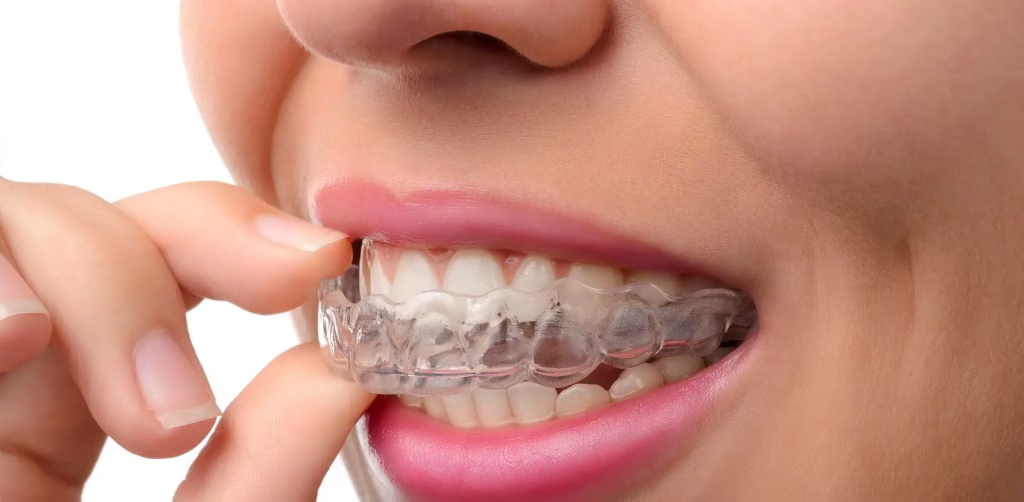
Achieve a Perfect Smile Without Braces -A Complete Clear Aligners Guide
Author
Dr. Anusha Unni K ( Founder of Smile Mantra Dental Clinic )
A Better Way to Improve Your Smile Without Going Through Braces
When patients come to me asking about teeth straightening, many of them already have one concern in mind they want results, but they don’t want to go through the experience of wearing braces.
In today’s practice, I don’t see alignment correction as something that should interrupt your lifestyle. It should be something that fits into it. That is why, in many suitable cases, I recommend clear aligners. They allow us to improve alignment in a controlled and comfortable way, without making the treatment the center of your daily life.
What Makes Clear Aligners a Practical Choice for Modern Patients
Clear aligners are not just an alternative to braces they represent a shift in how we approach orthodontic care. Instead of adapting your routine to the treatment, the treatment adapts to you.
Patients who choose aligners usually notice that they can continue their work, social interactions, and personal habits without feeling restricted. This makes a real difference, especially for adults who want improvement without compromise.
From my experience, when a treatment feels manageable, patients are more consistent—and that consistency directly affects the results.
How I Approach Teeth Movement with Clear Aligners
Teeth alignment is not about applying force it is about applying the right amount of force in the right way. Clear aligners allow me to do that with precision.
Each aligner is designed as part of a sequence. Instead of making sudden changes, the movement is broken down into small, controlled steps. This approach allows the teeth and surrounding structures to adapt gradually.
This is why patients often find the process more comfortable. The movement is planned, guided, and monitored, rather than being aggressive or unpredictable.
Why Planning Matters More Than the Treatment Itself
One thing I always emphasize is this good results come from good planning.
Before starting aligner treatment, I spend time analyzing your teeth using digital tools. This allows me to understand not just how your teeth look now, but how they should move over time.
With proper planning, I can:
- Control the direction of movement
- Avoid unnecessary corrections later
- Improve the accuracy of results
- Maintain safety throughout the process
- Set realistic expectations
- Deliver a more stable outcome
This step often determines how smooth your treatment journey will be.
The Kind of Cases Where Clear Aligners Work Best
Clear aligners are highly effective when used in the right situations. In my practice, I recommend them for patients where we can achieve predictable and stable results.
They are commonly suitable for:
- Slightly misaligned teeth
- Gaps affecting the appearance of the smile
- Moderate crowding that needs correction
- Teeth that have shifted after previous treatment
- Minor bite adjustments
- Smile imbalance that affects confidence
Every case is different, which is why a proper evaluation is always necessary before deciding on the approach.
Why Many Patients Find This Option Easier to Continue
One of the biggest challenges in any dental treatment is not starting—it is continuing.
With aligners, I see a clear difference. Patients are more likely to follow instructions because the treatment does not feel restrictive.
They can:
- Eat without worrying about damage
- Maintain proper oral hygiene
- Manage their routine comfortably
- Avoid frequent discomfort
- Stay confident during interactions
- Continue treatment without interruptions
This ease of continuation plays a major role in achieving the final result.
What the Treatment Journey Looks Like in a Real Clinical Setting
I always believe that patients should know exactly what to expect before they begin.
The process typically starts with a consultation, where I assess your teeth and understand your goals. This is followed by a digital scan that allows me to design your treatment plan.
Once the aligners are ready, you begin wearing them in a sequence. Each aligner is part of a planned progression, and I monitor your progress at regular intervals.
This structured approach ensures that:
- The treatment stays on track
- Adjustments are made when needed
- Results remain predictable
- Patients stay informed
- Progress is clearly visible
- The journey feels guided
What You May Notice in the Early Phase of Treatment
The initial days of wearing aligners are usually about adaptation.
Some patients feel slight pressure when they start a new aligner. This is expected and indicates that the aligners are working as planned. There may also be a short period where you become more aware of wearing them.
These changes settle quickly. Once you adjust, aligners become a natural part of your routine rather than something you constantly notice.
Why I Consider Clear Aligners a Controlled and Reliable Approach
In any treatment, control and predictability are essential. Clear aligners allow me to guide tooth movement in a way that is measured and planned.
This controlled approach helps in:
- Maintaining patient comfort
- Reducing unnecessary stress on teeth
- Ensuring gradual adaptation
- Improving treatment accuracy
- Preventing complications
- Achieving stable results
When used correctly, aligners provide a balance between comfort and effectiveness.
When I Recommend Clear Aligners for the Best Results
Not every alignment case needs the same approach. In my practice, I recommend clear aligners when I am confident that the treatment can deliver both effective and comfortable results.
The decision is always based on a proper clinical evaluation. I look at how your teeth are positioned, how your bite functions, and what kind of outcome you expect. When aligners are the right fit, they offer a balanced combination of precision and convenience.
I usually recommend aligners when:
- Alignment concerns are mild to moderate
- The patient prefers a discreet option
- Daily flexibility is important
- Oral hygiene needs to be maintained easily
- The patient can follow wearing instructions consistently
- Long-term stability can be achieved with planned movement
Why Consistency Matters More Than the Treatment Itself
One thing I always explain clearly is that aligners work only when they are worn as advised.
Unlike braces, which are fixed, aligners depend on patient participation. When they are worn consistently for most of the day, the movement happens exactly as planned. When they are not, the progress becomes irregular.
To keep your treatment on track, I advise:
- Wearing aligners for the recommended hours daily
- Changing aligners only as instructed
- Avoiding long gaps without wearing them
- Keeping them safely stored when removed
- Following the schedule without skipping
- Attending follow-up appointments regularly
Consistency is what ensures that the treatment remains smooth and predictable.
What Most Patients Experience During Treatment
Before starting, many patients are concerned about discomfort. In most cases, aligners are much easier to adapt to than expected.
You may feel slight pressure when starting a new aligner. I usually tell my patients this is a positive sign—it means the aligners are working. This feeling reduces within a short time.
Apart from that, patients generally find the treatment comfortable and easy to manage as part of their daily routine.
Why Attachments and Refinements Help Improve Precision
In some cases, I may recommend small attachments on certain teeth. These are designed to improve how aligners grip and guide movement.
They are not always required, but when used, they help achieve better control. Similarly, refinements are sometimes needed after the initial phase.
Refinements involve additional aligners to fine-tune the final result. These are part of achieving accuracy and should be seen as a step toward better outcomes.
How Long Does It Take to See Visible Changes in Your Smile
Patients often ask how quickly they will notice results. While every case is different, many start seeing changes within a few weeks or months.
The overall timeline depends on the complexity of alignment and how consistently the aligners are worn. Patients who follow instructions properly usually see steady progress.
Rather than focusing only on speed, I always guide patients to focus on consistency and accuracy.
Habits That Help You Get the Best Results from Aligners
From my experience, certain habits make a significant difference in treatment outcomes.
Simple habits that I recommend:
- Wearing aligners as instructed every day
- Cleaning them regularly to maintain hygiene
- Removing them only when necessary
- Following the sequence correctly
- Storing them properly when not in use
- Staying consistent with follow-ups
These small steps help ensure that the treatment stays on track.
Why Delaying Teeth Alignment Can Lead to Bigger Issues
Many patients consider alignment as a cosmetic concern and delay it. But in my experience, misaligned teeth can affect more than just appearance.
When teeth are not properly aligned, it becomes harder to maintain oral hygiene. Over time, this can increase the chances of dental issues and affect overall oral health.
When alignment is delayed, it may lead to:
- Difficulty in cleaning certain areas properly
- Increased risk of cavities and gum concerns
- Uneven pressure while biting or chewing
- Gradual worsening of alignment
- Additional strain on certain teeth
- More complex treatment later
Addressing alignment early usually makes the process simpler and more effective.
What Happens After Your Aligners Have Completed Their Work
Once your teeth are aligned, the treatment moves into the retention phase. This stage is just as important as the treatment itself.
Teeth naturally tend to shift back if not supported. Retainers are used to maintain the new position while the surrounding structures stabilize.
After treatment, I usually recommend:
- Wearing retainers as advised
- Following the schedule consistently
- Maintaining regular check-ups
- Keeping retainers clean and safe
- Avoiding long gaps without wearing them
- Reporting any changes early
How I Ensure Long-Term Stability After Treatment
Long-term stability depends on how well the retention phase is followed. Patients who wear retainers as advised are able to maintain their results effectively.
Skipping this step can lead to gradual shifting of teeth, which may require further correction. This is why I always emphasize retention as an essential part of the process.
The Approach I Follow to Create a Natural and Balanced Smile
In my practice, I focus not only on alignment but also on how the smile looks overall.
Every patient has unique facial features and dental structure. My goal is to create a smile that looks natural and balanced, rather than overcorrected.
At Smile Mantra Dental Clinic, each treatment is planned individually, with attention to both function and aesthetics.
Take the First Step Towards Improving Your Smile with Confidence
If you have been thinking about straightening your teeth but were unsure about braces, clear aligners can be a comfortable and practical option.
A proper consultation will help you understand your condition clearly and choose the right treatment.
Taking the first step can help you:
- Understand your alignment clearly
- Explore suitable treatment options
- Get a personalized treatment plan
- See expected results in advance
- Begin treatment with confidence
- Move towards a healthier smile
Book your consultation today and begin your journey towards a confident, naturally aligned smile.
Frequently Asked Questions
Can clear aligners completely straighten my teeth?
Yes, they are effective for most mild to moderate alignment concerns when used properly.
How many hours should I wear aligners daily?
Around 20–22 hours per day for best results.
Will aligners affect my daily routine?
They are designed to fit into your routine with minimal disruption.
Are clear aligners safe?
Yes, when planned and monitored properly, they are safe and reliable.
What happens if I don’t wear them regularly?
Irregular use can delay treatment and affect the outcome.